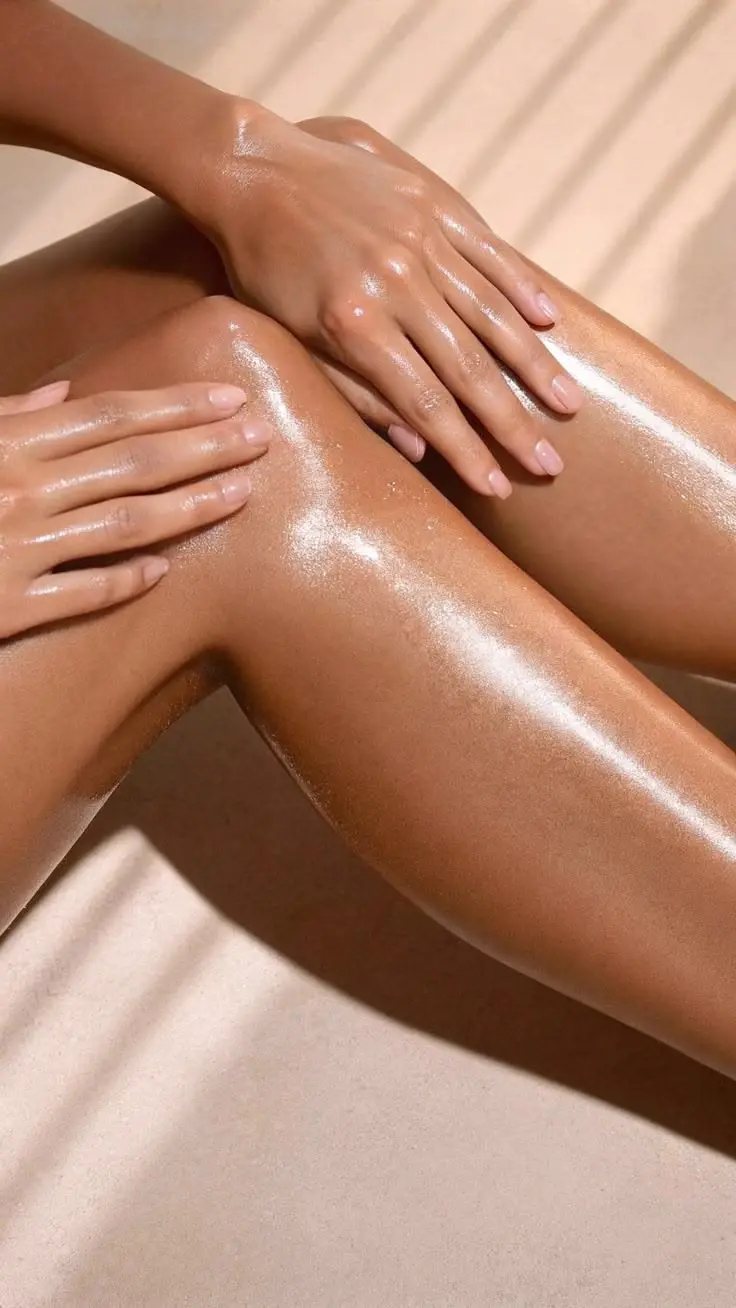

You can get a spray tan with acne-prone skin. DHA reacts with the outermost layer of dead skin cells rather than sitting in your pores, and the solution is misted on rather than rubbed in, so there is no massaging product into your skin the way there is with a self-tan cream. The two things that matter are prep and timing, and both are easy to get right.
Does Spray Tan Cause Acne or Clog Pores?
It’s unlikely to. DHA works on the stratum corneum, the layer of dead cells on the surface of your skin, and most of it stays there. What has caused problems for people historically is thick, oil-heavy self-tanning lotions applied by hand, which can sit on the skin and be worked into pores during application. Dermatologists recommend oil-free, non-comedogenic products for breakout-prone skin, and an automated booth fits that well: the solution is lightweight, applied as an even mist, and never rubbed in.
Which Solution Is Better for Acne-Prone Skin?
Clear, if you want the shorter ingredient list. It has fewer additives and colourants than Malibu, which carries a cosmetic bronzer, and it develops with no instant tint. Both are paraben-free and fragrance-free, and both rinse at the same 6 to 8 hour mark. If your skin is reactive as well as breakout-prone, our post on spray tanning with sensitive skin covers patch testing, which is worth doing before a first session.
How Should You Prep Acne-Prone Skin?
Exfoliate gently a day or two before, not on the day. Then pause active acne treatments for about 24 hours beforehand, specifically salicylic acid, benzoyl peroxide and retinoids. These change how the top layer of your skin behaves, and skin mid-treatment takes colour unevenly, which is what produces patchy results. On the day itself, arrive with clean, dry skin and no lotion, deodorant or perfume. Our prep and aftercare guide has the full checklist.
Should You Use Barrier Cream on Active Breakouts?
Yes, and it is provided at the studio. A thin layer of barrier cream over an active breakout stops solution from concentrating on skin that is already raised or inflamed, which is where colour tends to grab hardest and look darkest. Use it sparingly and only where you need it. Barrier cream is also what you put on palms, knuckles, elbows and ankles for the same reason.
What Aftercare Works Best for Breakout-Prone Skin?
Stay dry for 6 to 8 hours, then rinse with lukewarm water and no soap. Pat dry rather than rubbing. Once you are rinsed, use a lightweight, oil-free moisturizer and skip the heavy or oil-based creams entirely for the first day, both because oils break down colour and because they are the last thing breakout-prone skin needs. Resume your usual acne treatments after the first rinse, keeping in mind that anything exfoliating will lift colour where you apply it.
When Should You Postpone Your Session?
If you have open, broken or actively inflamed breakouts, wait a few days. Colour settles unevenly over broken skin and tends to draw attention to exactly the areas you were hoping to even out. The same applies immediately after a chemical peel, a strong retinoid course, or any treatment that has left your skin raw. Once things have calmed down, you are fine to book.
Will a Spray Tan Hide My Acne?
It will even out overall tone and reduce the contrast between a breakout and the skin around it, which for most people is enough to feel noticeably better in photos. It will not conceal texture, since colour does not flatten anything raised. Set expectations there and you will be happy with the result.
Is a Spray Tan Better Than UV Tanning for Acne?
Yes. The Canadian Dermatology Association notes that tanning makes the brown or red marks left by acne more noticeable and slower to fade. A spray tan evens out your overall tone with no UV involved.
Acne-prone skin and a spray tan coexist without much trouble. Pause the actives, use barrier cream where you need it, keep the aftercare oil-free, and wait out any active flare. Book your session at TANNED TO in Toronto.
Sources
Canadian Dermatology Association: Acne · American Academy of Dermatology: Acne overview · Canadian Dermatology Association: The Use of Sunless Tanners