DHA, the active ingredient in every spray tan, reacts only with the outermost layer of dead skin cells and is not absorbed into your bloodstream, so it does not reach your baby. Most providers, including us, still suggest waiting until after the first trimester. That is a precaution rather than a response to any known risk. Check with your doctor first, then here is what to expect.
Is Spray Tan Toxic to Babies?
No. DHA reacts with the stratum corneum, the layer of dead cells on the surface of your skin, and does not penetrate past it or enter your bloodstream. Because it never reaches the placenta, it cannot reach your baby. The concern during pregnancy has never really been the skin contact. It is inhaling the mist, which is why ventilation and nose plugs are the things worth paying attention to.
Can I Get a Spray Tan at 4 Weeks Pregnant?
We suggest waiting until after the first trimester, around 12 to 14 weeks. This is a precaution, not a response to evidence of harm: the first trimester is when your baby’s major organs form, and the general principle across pregnancy care is to minimise unnecessary exposures during that window. There is no research showing a spray tan at 4 weeks causes harm. Ask your doctor and follow their guidance over ours.
What Does the Research Actually Say About DHA?
DHA is approved by the FDA for external cosmetic use, and studies have found no evidence that it is absorbed into the bloodstream or harms a developing baby. What has not been studied in depth is repeated inhalation of the mist over time. That gap is the reason nearly every recommendation you will read focuses on ventilation, nose plugs and keeping spray away from your face rather than on the DHA itself.
How Our Booth Reduces Mist Exposure
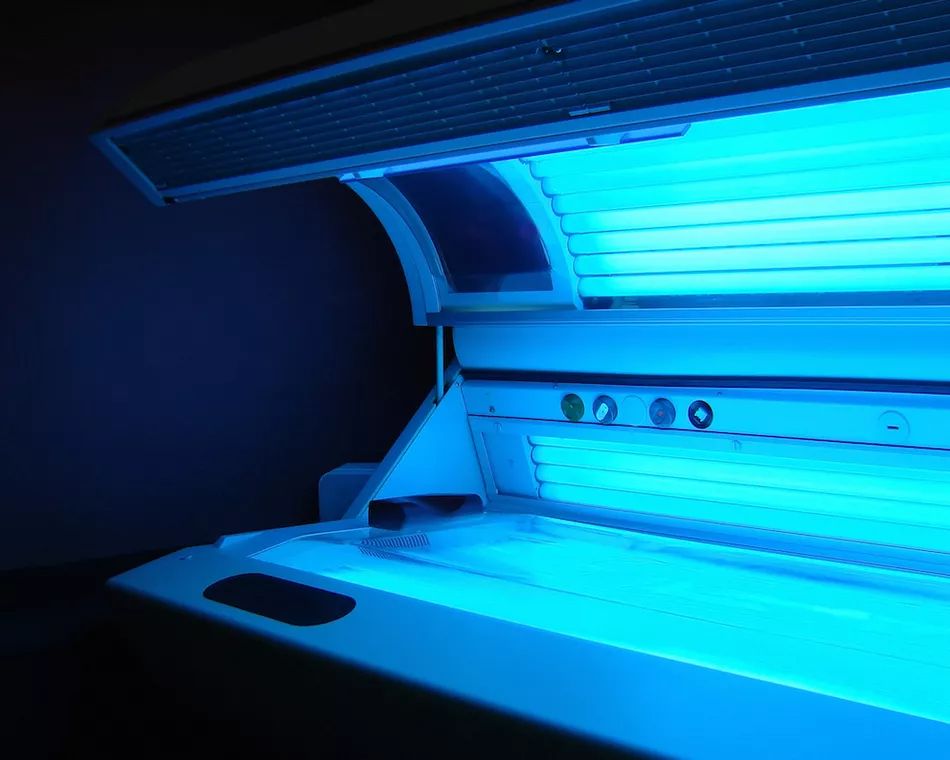
Since inhalation is the actual concern, it is the thing worth controlling. Our automated booth is private and self-guided, with a built-in air purification system that actively draws air out of the booth during and after your session. Complimentary nose plugs are provided. There is no technician in the room at any point, so nobody is holding a spray gun near your face, and you set the solution and depth yourself.
Should You Choose Malibu or Clear While Pregnant?
Clear is the simpler option. It has fewer additives and colourants than Malibu, which carries a cosmetic bronzer, and it develops with no instant tint. Either is fine, but if you are already minimising what goes on your skin, Clear is the shorter ingredient list. Both rinse at the same 6 to 8 hours. You can also skip your face entirely, since facial skin is thinner and more absorbent, and the rest of you will still take plenty of colour.
When Should You Skip a Session Entirely?
Skip it if you have broken skin, a rash, or any pregnancy-related skin irritation, and wait until it has healed. Skip it if you are feeling nauseous, because standing in a booth is not where you want to be. And know that pregnancy hormones change how skin takes colour, so your tan may develop darker, lighter or less evenly than it normally would. That is normal and temporary.
The Bottom Line
Spray tanning is generally considered safe during pregnancy after the first trimester, as long as you keep mist exposure low and your skin is intact. DHA stays on the surface and does not reach your baby. None of this is medical advice: talk to your doctor before you book, and follow what they tell you over anything you read here.
Feeling good in your skin matters, and pregnancy is no exception. Once your doctor has given you the go-ahead, read our prep and aftercare guide so you know exactly what to expect, then book a session at TANNED TO in Toronto.